

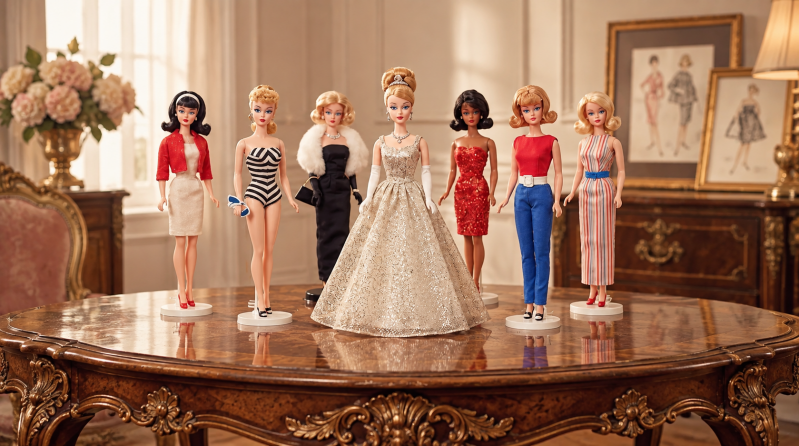
If you grew up in the ’80s or ’90s, there’s a pretty good chance Barbie lived somewhere in your house.
Maybe she had a Dream House. Maybe she drove a pink Corvette. Maybe she spent most of her time crammed into a plastic storage case with seventeen mismatched shoes, tangled hair, and a Ken doll who had mysteriously lost his shirt sometime around 1987.
And if you still have those Barbies tucked away in a closet, basement, or attic, you may have wondered:
Are any of these things actually worth money?
The answer is… maybe.
Most Barbie dolls are worth fairly modest amounts today. But a small handful can be worth thousands—and occasionally tens of thousands—of dollars.
The trick is knowing what separates an ordinary Barbie from the dolls collectors really chase.
So before you start digging through Mom’s attic looking for that old pink Barbie case, here’s what you need to know.
What Actually Makes a Barbie Rare?
Here’s the first rule of Barbie collecting:
Old doesn’t automatically mean valuable.
Several factors determine whether collectors will pay serious money for a doll.
Era Matters—a Lot
When it comes to vintage Barbie, the earliest dolls usually rule the Dream House.
Barbies produced from 1959 through 1966 sit near the top of the collector market. Production numbers during Barbie’s earliest years were considerably lower than they would become in later decades, and collector demand for these dolls has remained strong for decades.
That means the Barbie your mom played with in 1962 may deserve considerably more attention than the dozen Barbies you accumulated during Christmas mornings in the 1980s.
Boxes, Shoes and Those Tiny Accessories Matter
Remember all those microscopic Barbie accessories that immediately disappeared into the carpet?
Collectors wish we had kept better track of them.
A doll with her original box, stand, clothing, shoes and accessories can be worth dramatically more than the exact same doll sold loose—sometimes five to twenty times more.
Missing shoes, replacement outfits, lost stands and other incomplete pieces can all lower a doll’s value.
Suddenly Mom yelling, “Don’t lose Barbie’s shoes!” seems surprisingly reasonable.
Collector Lines Play by Different Rules
Not every Barbie was designed to spend her afternoons being driven around the living room in a pink convertible.
Some releases were created specifically for adult collectors.
Two of the best-known examples are Bob Mackie Barbies and Silkstone Barbie dolls.
These dolls have their own collector markets, and certain releases can command substantial prices.
Truly Limited Production Matters
“Limited Edition” printed on a box doesn’t automatically mean rare.
What collectors really look for are dolls that were genuinely produced in small numbers—such as convention exclusives, members-only club releases or dolls available during short promotional windows.
A genuinely scarce doll can hold value very differently from a mass-produced Barbie that simply carried a “limited edition” label.
Condition Still Counts
Vintage Barbie has aged right along with the rest of us.
Hair damage, fading vinyl and other deterioration can significantly affect value.
Collectors of older dolls also watch for green ear, a discoloration problem associated with certain vintage earrings and the materials used in them.
The closer a vintage doll is to her original condition, the better.
The Queen of the Barbie World: The Original 1959 Barbie
Every serious Barbie collector guide eventually arrives here.
The original 1959 Barbie is the doll that started everything.
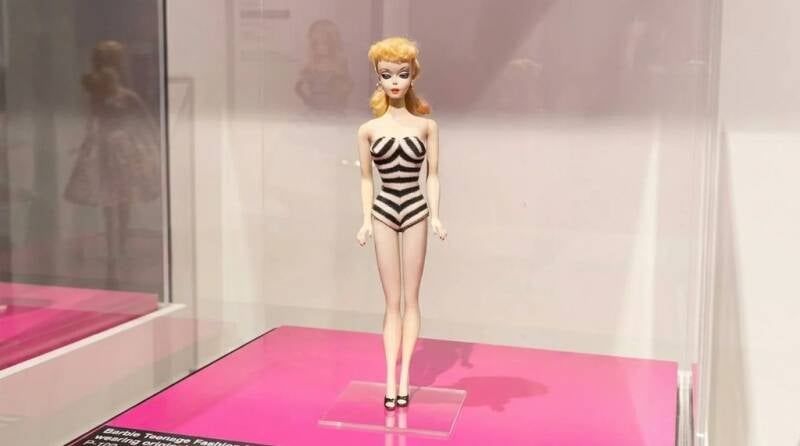
Early Number 1 and Number 2 Barbies are among the rarest and most valuable versions. Collectors identify authentic examples through details such as specific body markings and the distinctive stand design associated with the earliest dolls.
And this is where Barbie collecting can become serious business.
A genuine, mint-condition original Barbie with her box and accessories intact can sell well into five figures.
Even well-preserved examples without their original boxes can command substantial prices from collectors specializing in Barbie’s earliest years.
Not bad for a doll that originally cost just a few dollars.
Bubblecuts, Color Magic and the Barbies of the Early ’60s
Barbie’s hairstyles changed almost as often as ours did.
One of the most recognizable early looks was Bubblecut Barbie, introduced during the early 1960s. These dolls remain highly sought after among collectors of Barbie’s first decade.
Then came one of the wonderfully gimmicky toys of the era: Color Magic Barbie.
Released in 1966, Color Magic Barbie featured a novelty color-changing feature that helped make her stand out from other dolls of the period.
Both Bubblecut and Color Magic Barbies benefit from the same basic collector appeal as the original 1959 doll: early production, relative scarcity and strong demand, although generally not to the same extreme as the earliest Number 1 and Number 2 dolls.
American Girl Barbie
No, this isn’t the American Girl doll you remember from those catalogs that arrived in the mailbox.
American Girl Barbie appeared during the mid-1960s and introduced important changes, including bendable legs and a new face mold.
Collectors continue to seek these dolls specifically, and not every American Girl Barbie is valued equally.
Certain hair colors and variations can command premiums over other versions from the same line.
It’s another reminder that tiny differences can make surprisingly large differences in the vintage Barbie world.
Silkstone Barbie: Definitely Not Made for the Sandbox
Jump forward several decades and Barbie collecting changes considerably.
Mattel created the Silkstone Barbie line specifically for adult collectors, rather than primarily as children's toys.
Silkstone dolls use a different material formulation and feature more elaborate sculpting and fashion design than typical play-line Barbies.
And yes, collectors noticed.
Values vary tremendously depending on the particular release. Standard Silkstone dolls often sell in the low hundreds, while rarer, earlier or genuinely limited releases can climb considerably higher.
But there’s an important lesson here for anyone who assumes “collectible” automatically means “investment.”
Some early Silkstone releases have settled at roughly half their peak prices over time.
Collector markets change.
Even beautiful dolls specifically created for collectors aren't immune.
Bob Mackie Barbie: When Barbie Went Full Glamour
If you remember seeing these dolls during the late ’80s and ’90s, you probably remember thinking:
There is absolutely no way anyone is letting a kid play with that.
Designer Bob Mackie began creating elaborately costumed Barbie dolls in the late 1980s, and the resulting line became one of the most consistently collected series in Barbie history.
These weren't exactly backyard-picnic Barbies.
We're talking dramatic gowns, elaborate details and the kind of styling that made ordinary Barbie look like she had seriously underdressed for the occasion.
Their detailed fashions and limited production runs helped give Bob Mackie Barbies staying power with collectors that most mass-produced 1980s and 1990s Barbie releases simply don't have.
Why Barbie Prices Seem to Be All Over the Place
Search online long enough and you'll eventually find someone claiming your Barbie is worth enough money to pay off the mortgage.
Don't start picking out a new car just yet.
High-end collectible Barbies don't have fixed values like products sitting on a store shelf.
Their value ultimately comes down to what an actual collector is willing to pay at a particular moment.
A doll might command a very strong price one year and sell noticeably lower several years later—even though absolutely nothing about the doll changed.
Collector demand changed.
That's why any price guide should be treated as a general signal rather than a guarantee.
The real value becomes clear when a real buyer is willing to make a real offer.
One Big Warning: Watch Out for Reproductions
Here's where things get tricky.
The more valuable a Barbie becomes, the more worthwhile it becomes for someone to pass off a reproduction as the real thing.
This is particularly important with dolls from 1959 through 1966, where authentic examples can command substantial prices.
If you think you've discovered an early Barbie, don't identify her based solely on hairstyle or clothing.
Body markings, construction details, stands, clothing tags and other characteristics can help distinguish genuine vintage dolls from later reproductions.
When potentially thousands of dollars are involved, authentication matters.
So… What About That Box of Barbies in Your Attic?
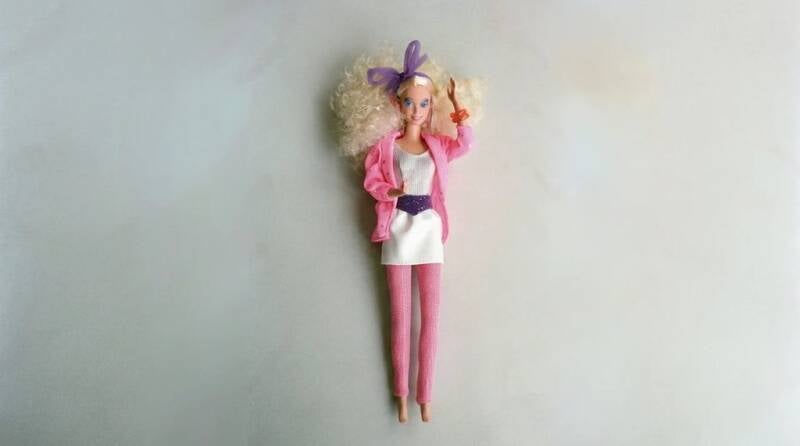
If most of your collection dates from the 1980s, 1990s or later, chances are you aren't sitting on a secret Barbie fortune.
And that's completely normal.
Those decades produced enormous numbers of Barbie dolls, which means many are still relatively easy for collectors to find.
Their value may be closer to a reasonable individual or bulk resale price than the eye-popping numbers associated with rare early dolls.
But don't dump the entire collection into one giant yard-sale box just yet.
If you've got older Barbies, dolls still in their original boxes, unusual releases, Bob Mackie dolls, Silkstones, convention exclusives or other named collector editions, pull those aside and investigate them individually.
Sometimes the most interesting doll in a collection isn't the one you expect.
And even if your childhood Barbie turns out to be worth $20 instead of $20,000?
There’s still something pretty great about opening an old case and finding that familiar plastic face staring back at you.
Because suddenly you're not standing in your attic anymore.
You're eight years old again, sitting cross-legged on the living-room carpet, Barbie's Corvette is parked beside the Dream House, one tiny pink shoe is already missing…
…and you've got the entire afternoon to play.
Add comment
Comments